Test Drive: Meathead's Nashville Hot Chicken
Inspired by / original recipe: amazingribs.com
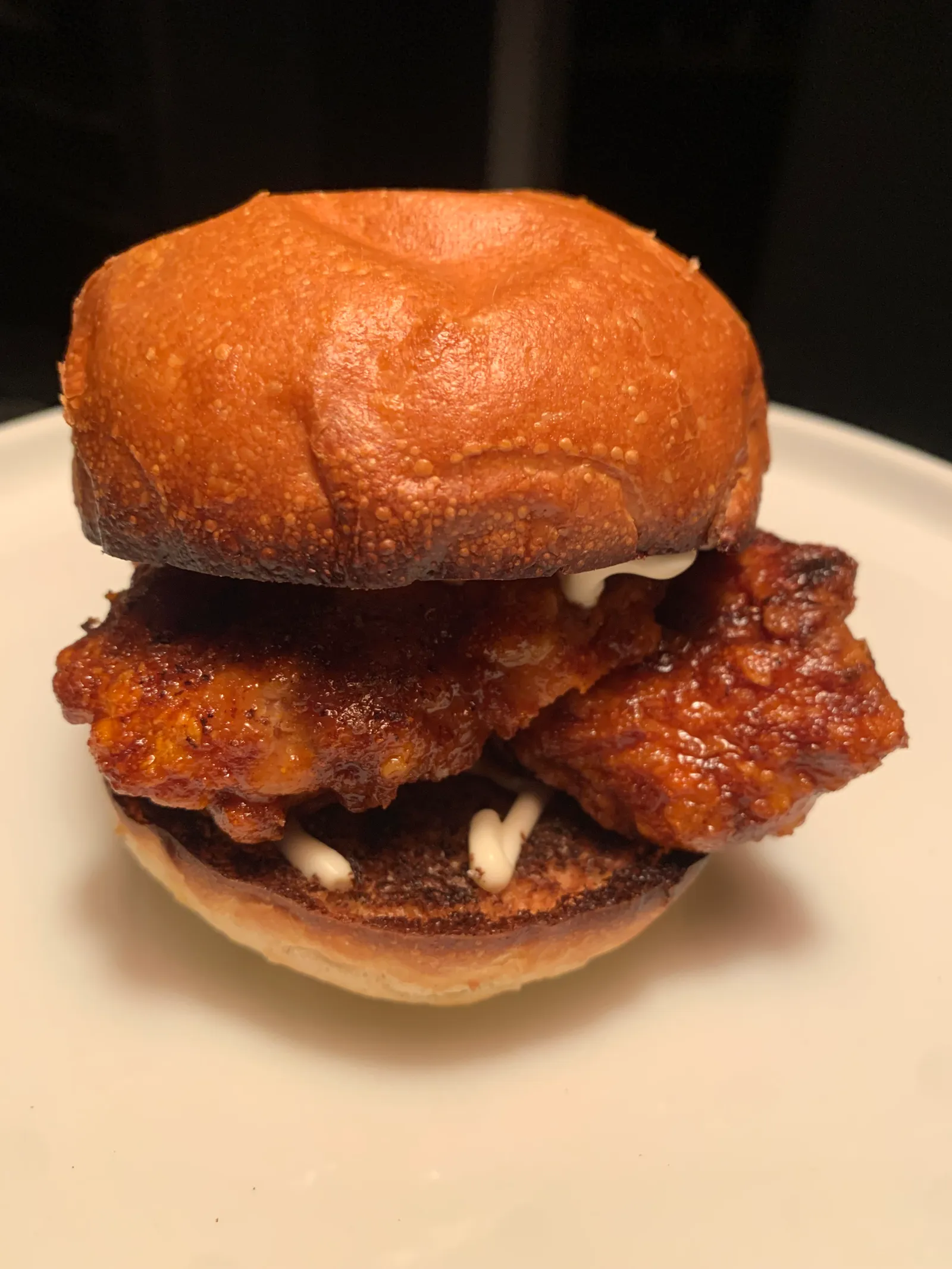
Cole’s version
Cole's Nashville Hot Chicken
Inspired by / original recipe: https://amazingribs.com/tested-recipes/chicken-recipes/nashville-hot-chicken/
Recipe and cooking notes: https://cookingcarguy.com/test-drive-meatheads-nashville-hot-chicken/#recipe
Ingredients
- 680 g (1 1/2 lb) boneless chicken breasts
- 4 mL (3/4 tsp) Morton coarse kosher salt, for dry brining (half as much if you use table salt)
- Cayenne, chili powder, paprika, garlic powder, mustard powder and salt, a light sprinkle of each
- 180 mL (3/4 cup) all-purpose flour
- 180 mL (3/4 cup) cornstarch
- 5 mL (1 tsp) MSG (optional)
- 1 to 2 large eggs, beaten
- Canola oil, about 2.5 cm (1 in) deep in a Dutch oven, for frying
- 240 mL (1 cup) fresh canola or vegetable oil, for the hot oil
- 45–90 mL (3–6 tbsp) cayenne
- 60 mL (4 tbsp) brown sugar
- 30 mL (2 tbsp) paprika
- 30 mL (2 tbsp) mustard powder
- 15 mL (1 tbsp) ground black pepper
- 15 mL (1 tbsp) garlic powder
- 7 mL (1 1/2 tsp) Morton coarse kosher salt
- Fresh hot peppers, diced, to taste: habanero, scotch bonnet, fresh cayenne or whatever you have
- Potato buns, mayo and pickles, to serve (optional)
Directions
- Pound the chicken breasts to an even thickness between sheets of plastic wrap, with a meat mallet or the bottom of a saucepan, then slice them into tenders.
- Salt the chicken with the kosher salt for the dry brine.
- Sprinkle the chicken lightly with cayenne, chili powder, paprika, garlic powder, mustard powder and salt.
- Mix the flour, cornstarch and MSG. Coat each piece in the flour mix, shake off the excess, dip it in the egg, then put it back in the flour mix.
- Rest the coated chicken on a rack in the fridge for 45 minutes to an hour. This one rest covers the dry brine and lets the coating hydrate.
- Make the hot oil while the chicken rests: warm the fresh oil with the cayenne, brown sugar, paprika, mustard powder, black pepper, garlic powder, salt and fresh peppers, stirring until the sugar has completely dissolved.
- Heat the frying oil to about 205°C (400°F) and no hotter; it will drop back toward 175°C (350°F) when the chicken goes in. Fry in batches, turning once, until the breast meat reads about 66°C (150°F). Smaller tenders take close to 10 minutes.
- Dip the fried chicken in the hot oil or brush it on. Never fry the chicken in the hot oil.
- Serve on a potato bun with mayo and a pickle, on its own, or with potato salad.
I got so obsessed with Nashville hot chicken that I needed to go to Nashville to try it. I didn’t need much forcing; I’m a huge live music fan, so the trip was a blast either way. My favourite was Bolton’s. Not necessarily the fanciest one out there, but wicked food and a classic place. One recommendation: never eat anything they make you sign a waiver for. It will melt your mouth and all of your insides.
At home, the recipe is Meathead’s Improved Nashville Fried Chicken from AmazingRibs, with the chicken fried using his fried chicken method. He is the best. I also referenced Hattie B’s recipe on Serious Eats. Nicole requests this about once a month. It’s a lot of steps, so some months we order from Dave’s Hot Chicken in Barrie instead.
What I changed and why
- Fresh peppers in the hot oil. Meathead calls for dried chiles or chile flakes of your choice; he uses chipotle powder and cayenne. I use cayenne, way more than you would think, plus fresh habanero, scotch bonnet and fresh cayenne peppers. Use whatever you have. I like habanero and scotch bonnet because they have a sweetness to them. You can’t tell the individual flavours apart once they’re together, but there’s a layer of complexity you don’t get from one pepper.
- Boneless breasts, pounded flat and sliced into tenders, instead of a whole chicken cut into ten pieces. I switch between this and bone-in legs and thighs depending on how we’re feeling and how we’re eating it. For a sandwich, tenders are best.
- One rest instead of two. Meathead dry brines for at least 30 minutes, then dredges and rests the chicken again for 20 to 30. I salt, season and dredge in a row, then give it one rest in the fridge for 45 minutes to an hour. I haven’t confirmed it, but I don’t think doing them back to back takes anything away from the dry brine or the crust.
The amounts on the card are Meathead’s plus my changes. The brine salt, MSG and eggs are scaled to 680 g (1 1/2 lb) of chicken; the dredge and the hot oil are full batches, so there’s enough to coat and dip. All of it scales: how much chicken you have, how big your eggs are, how hot you want it. Mine is on the extra-hot side. One thing I’ve learned in cooking is to start figuring out general rules and strategies for volumes, times and techniques.
The walkthrough
I pound the breasts to an even thickness, then slice them into tenders. Use a meat pounder, or the bottom of a saucepan with plastic wrap between it and the chicken. If you have a mallet with spikes on it, I find it tenderizes the chicken a bit and gives more surface area for the spices to stick to. Even thickness means every piece cooks at a similar rate; Meathead says to fry pieces of similar thickness together for the same reason. A piece twice as thick doesn’t take twice as long; it can take up to four times as long. Heat works its way in from the outside, and cooking time goes up with roughly the square of the thickness (Harold McGee covers this in On Food and Cooking).
Start with Meathead’s dry brine: salt the chicken. Then, right away, season the chicken itself with cayenne, chili powder, paprika, salt, garlic powder and mustard powder. Like Meathead, I season the chicken, not the flour. Some people put the seasoning in the flour, but that makes it hard to control how much of each spice ends up on the chicken. Then it goes into the flour, into the egg, and back into the flour, the way Meathead does it. The dredge is half flour and half cornstarch, the same split he uses.
I put a little powdered MSG in the dredge. Meathead recommends it too: he sprinkles Accent, which is MSG, on the chicken and says it “amps the flavor to 11.” You don’t need it, but if you’re worried about MSG, look at the research. The FDA considers it “generally recognized as safe” and was never able to confirm that MSG caused the reactions people reported (FDA Q&A). The scare goes back to a 1968 letter to the New England Journal of Medicine titled “Chinese Restaurant Syndrome.” It was based on symptoms, not science (Kenji explains it to CBS News), and the whole idea has terribly racist undertones.
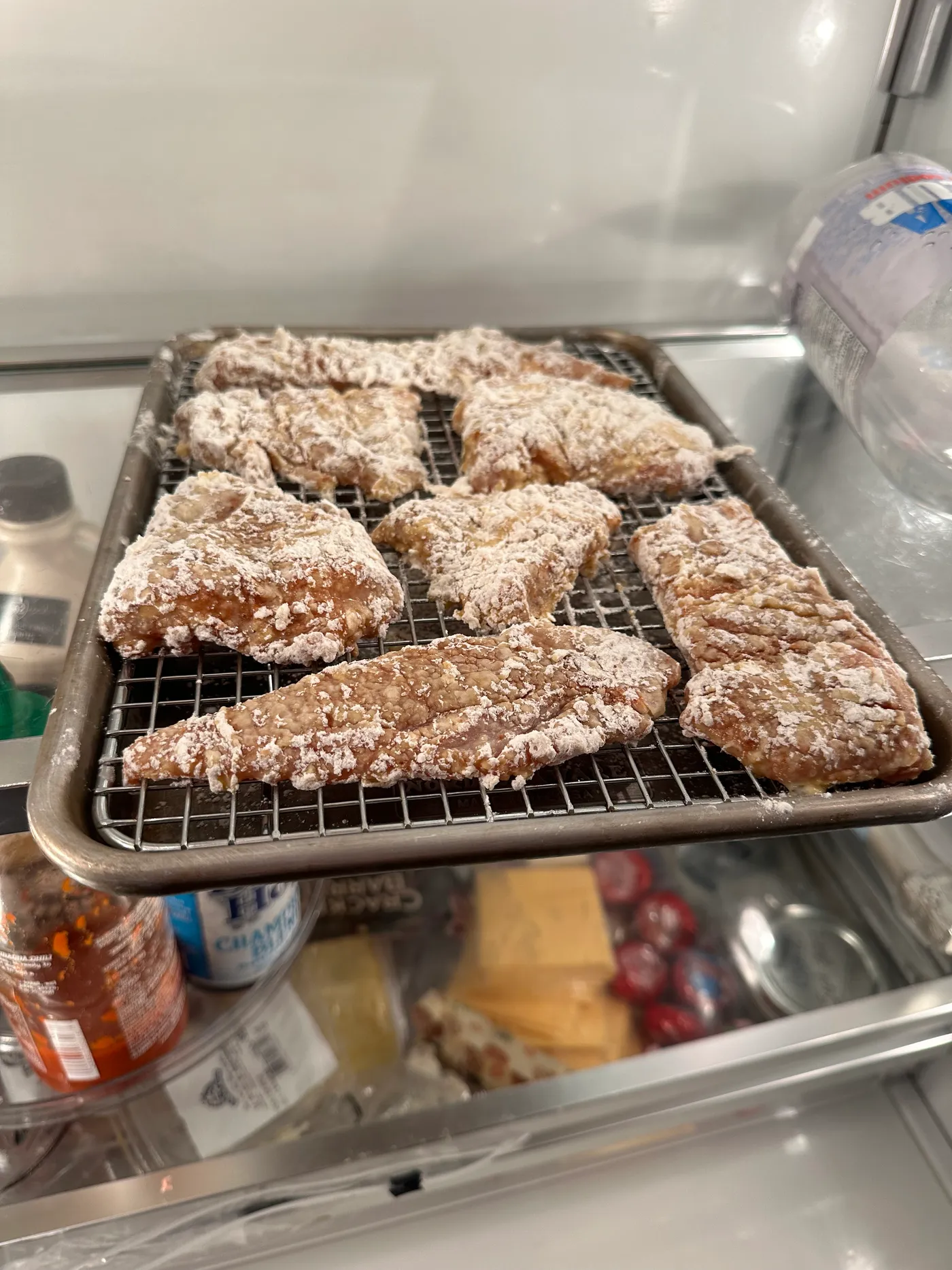
Then everything goes into the fridge for 45 minutes to an hour, which covers the dry brine and the coating at the same time. I’m usually closer to 45 because I don’t plan that far ahead. Meathead’s explanation for resting the coated chicken: the rest hydrates the starches and helps gluten form, and that helps the crust stay on. Too much gluten makes the crust tough, though, which is why the cornstarch is there; Kenji cuts the flour with cornstarch in his fried chicken for exactly that reason.
For oil, use anything that handles high heat. I use canola; peanut is another good one. From my understanding olive oil breaks down at high temperatures, and generic vegetable oil can be a blend of other oils, so I skip both.
I fry around 350°F (175°C). A bunch of cold chicken going in will cool the oil down fast, so fry in batches, or heat it to about 400°F (205°C) first and let it drop back when the chicken goes in. Don’t go past 400°F; Meathead warns it can start smoking. Smaller tenders take close to 10 minutes, but it varies with the size of the chicken and the heat of the oil, so go by temperature.
This is a shallow fry, not a deep fry: an inch or two of oil in a Dutch oven, with the chicken touching the bottom of the pot, where Meathead points out hot metal conducts more heat than hot oil. The way I understand it, with the top of the chicken above the oil, moisture can get out of it, so the crust actually crisps up instead of going soft. It also saves a ton of oil.
I pull breast meat at about 150°F (66°C), maybe slightly before; Kenji uses the same number for breast meat in his fried chicken. That’s below the 165°F (74°C) you see on food safety charts, and the reason is that food safety is about time as well as temperature. At 165°F chicken is safe in under 10 seconds. At 160°F (71°C) it takes about 14 seconds, and at 150°F about three minutes (the USDA’s time and temperature tables for poultry). On top of that there’s carryover: the outside of the meat is hotter than the centre, so after it comes out of the oil the heat keeps moving into the middle and the temperature keeps climbing. What makes a good hot chicken breast or tender is that it’s still juicy inside, and that comes down to the temperature you pull it at.
For legs or thighs I go to about 170°F (77°C), where Meathead says dark meat is best, because the connective tissue needs that to break down and make it soft and delicious instead of tasting fatty in your mouth.
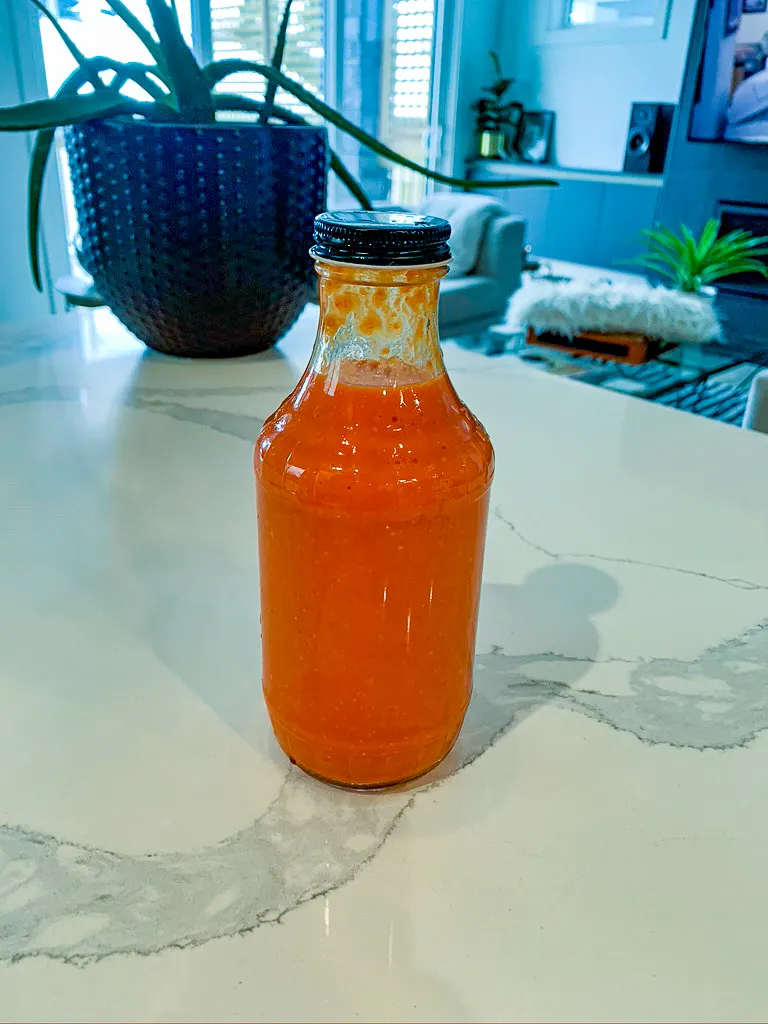
The hot oil is the Nashville part. Meathead’s is a cup of oil with dried chiles, brown sugar, paprika, mustard powder, black pepper, garlic powder and salt, left on the lowest heat for about 30 minutes to pull the flavour out. Mine gets a pile of diced fresh peppers too.
The sugar and the sweetness are one of the magic parts of Nashville hot chicken. Make sure the sugar dissolves completely or it tastes grainy. Get it right and it’s sweet, hot, complex and deep, and utterly delicious. I use brown sugar like Meathead, but I’ve used white too. Brown sugar is basically white sugar with some of the molasses left in or added back, so it’s a slightly different, deeper flavour. Either works.
A lesson I learned the hard way: you do not cook the chicken in the hot oil. I was under the impression that you fried the chicken in it, and I kept burning the spices until the whole thing turned into a bubbling mess. I posted on AmazingRibs asking for advice, and Meathead personally responded. After going back and forth a couple of times I realized the hot oil goes on after the chicken is fried. He later went into the recipe and added a note about it; it’s still there in step 2: “Please note that the chicken is fried in fresh oil, not the hot oil from step 1.” So that is my contribution to his website. I can’t say enough about him taking the time to help a casual home cook figure out the issue when he has that many followers.
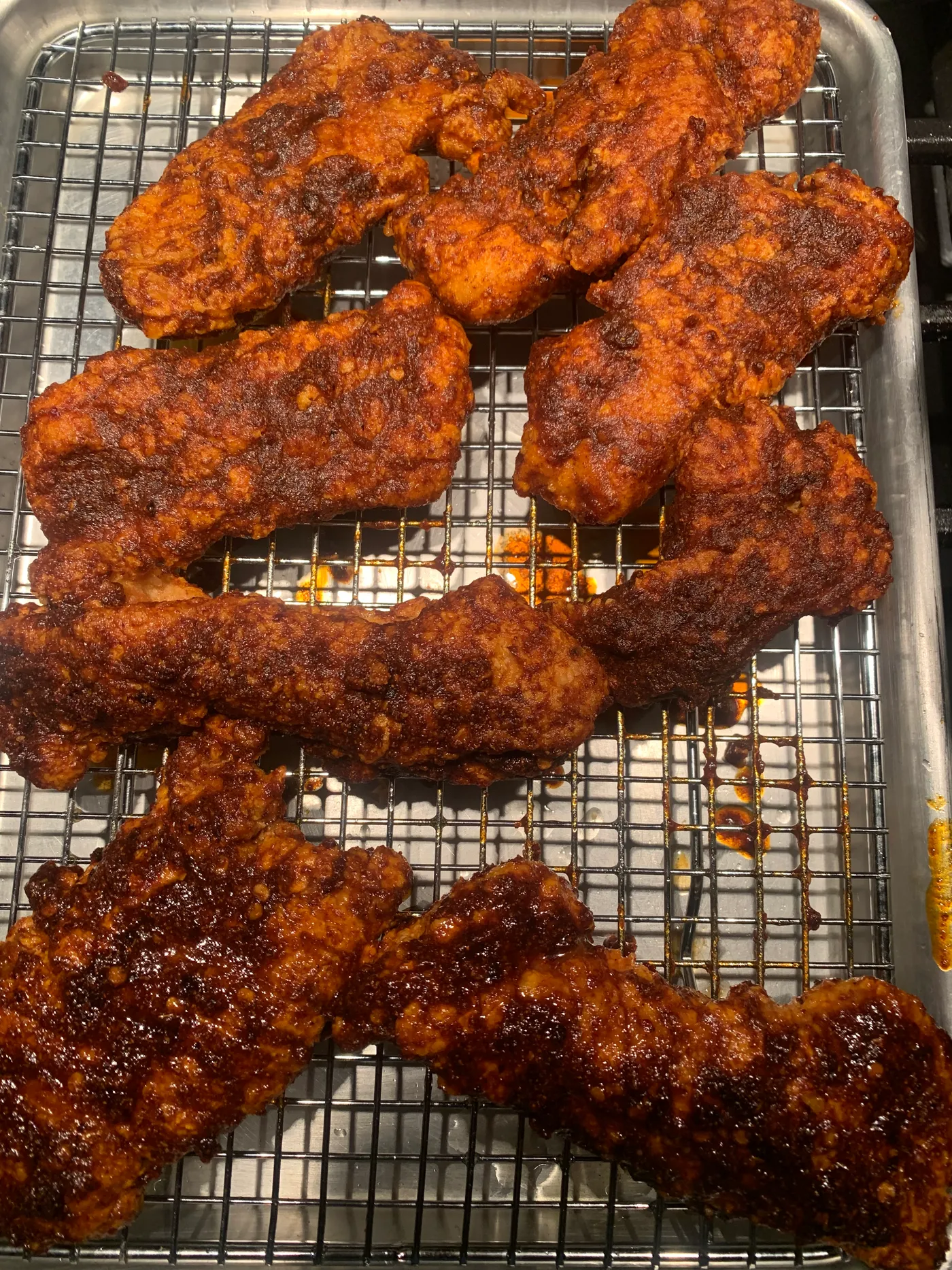
Dip it or brush it on; I’ve done both and either works. Tradition says pickle slices on white bread. Nicole doesn’t love pickles, so we often eat it on its own or with potato salad.
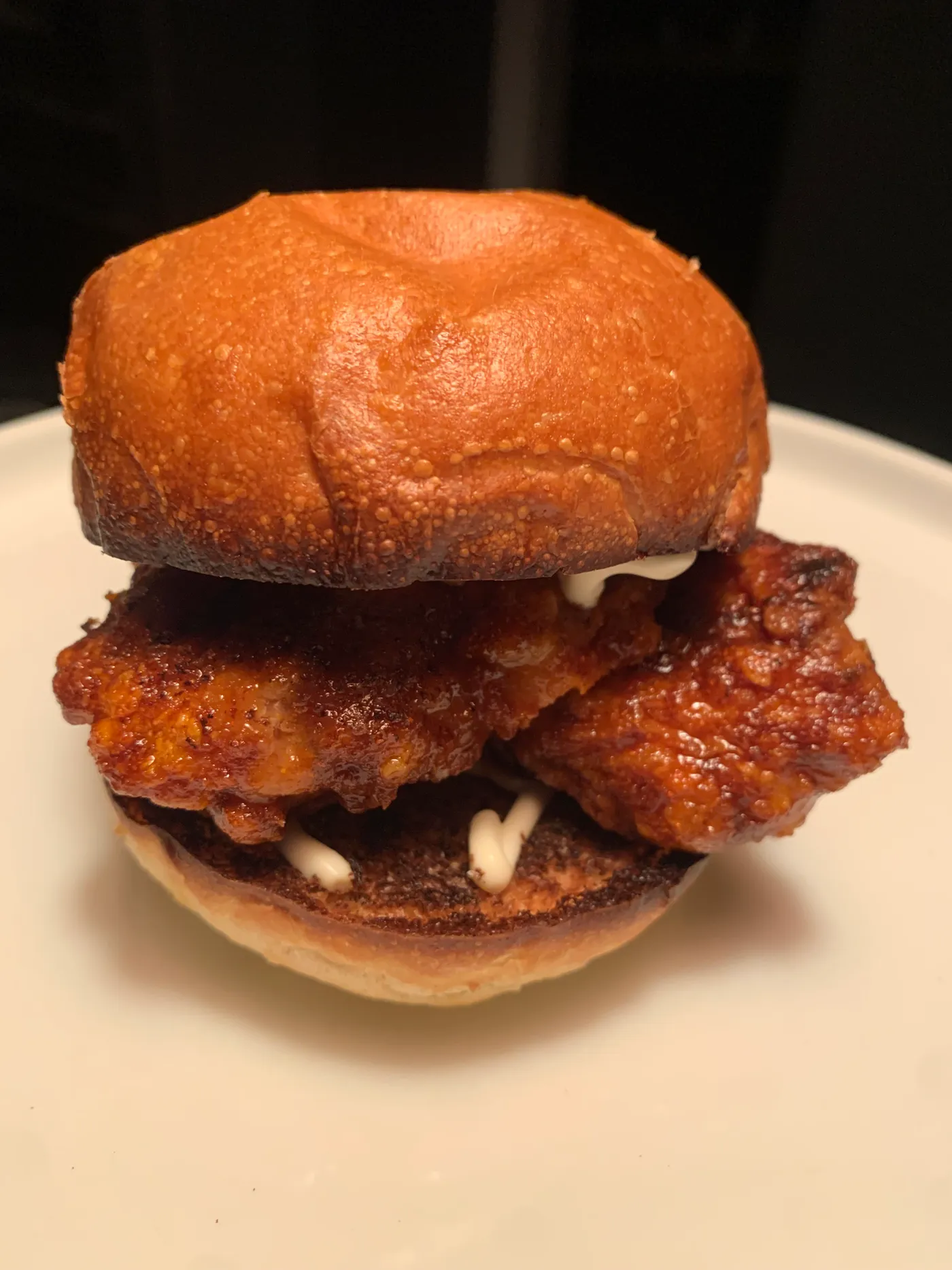
My favourite is the sandwich: a potato bun, mayo and a pickle.
Verdict
Phenomenal. It’s a lot of steps, which is why some months it’s Dave’s, but there’s a reason Nicole asks for it once a month. If you like heat, make it. And if a food makes you get on an airplane, determined to visit where it came from, it will always be a 10/10 for me.