Test Drive: Meathead's Pulled Pork, First Cook on the Offset
Inspired by / original recipe: amazingribs.com
Cole’s version
Cole's Offset-Smoked Pulled Pork
Ingredients
- 1 bone-in pork butt, about 5.4 kg (12 lb), cut into two pieces
- Kosher salt, for dry brining
- Meathead's Memphis Dust rub, enough to coat every side
- Apple cider vinegar in a spray bottle, for spritzing
- Oak splits for the firebox
- Meathead's Best Darn Mustard BBQ Sauce, to serve
- Buns, coleslaw and pickles, to serve
Directions
- Cut the pork butt into two pieces. More surface area means more smoke, more seasoning and more bark.
- Dry brine with kosher salt at least an hour before; overnight works too. Memphis Dust has no salt in it; Meathead's dry brining guide covers how much and how long.
- Coat every side with Memphis Dust the morning of the cook.
- Burn oak splits in the firebox until you have a bed of coals and the cook chamber is at about 150°C (300°F). Running slightly under is fine.
- Put the pork in the cook chamber with one remote probe in the meat and another reading the chamber temperature.
- Add a split about every 45 minutes to hold the temperature; this will vary significantly depending on how big your splits are, how dry your wood is, what type of wood, etc. Spritz the pork with apple cider vinegar now and then; how often depends on the humidity.
- When the meat stops rising, usually around 65°C (150°F), wrap each piece in foil to push through the stall.
- Unwrap for the last stretch, once the temperature has climbed more than 10°F (about 6°C) since you wrapped, to firm the bark back up. Some people stay wrapped until it's finished, but I like more bark; your call.
- Start probing each piece at about 93°C (200°F). It's done when the probe slides in like butter; the pieces will finish at different times.
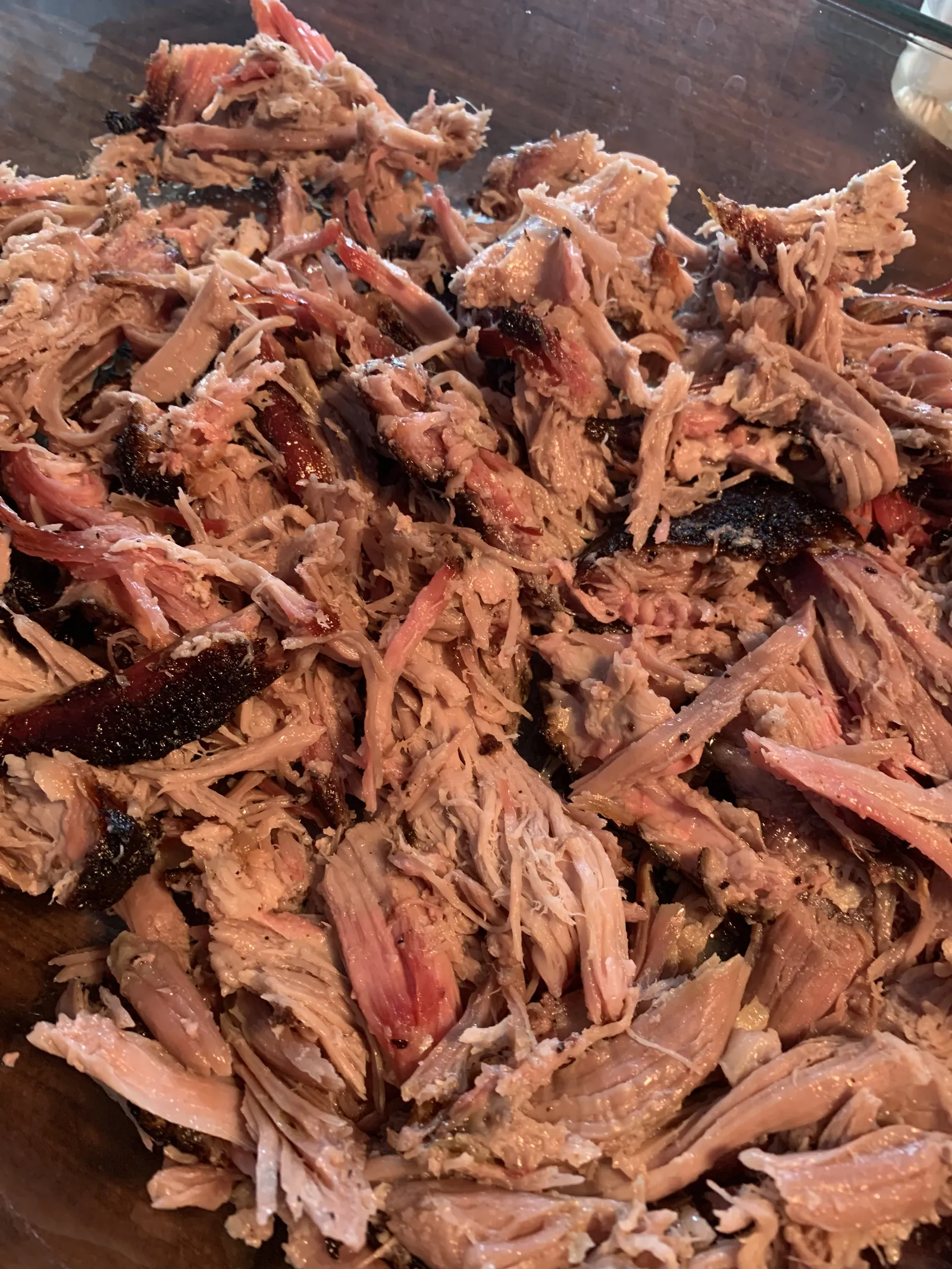
- Rest for at least 45 minutes, or wrap it and hold it in a cooler for hours. Pull with forks and pull out the bone.
- Toast the buns on the firebox, toaster, or any heat source and serve with the mustard sauce, slaw and pickles.
I always wanted an offset stick burner. This one is a refurbished oil drum built by Morris Co. Ironworks, and this was its first cook, at our place on the lake in Belleville, Ontario. I picked pork shoulder for the first run because it is very forgiving, and I needed to figure out how to control the temperature before I put anything expensive in there.
The recipe is Meathead’s from AmazingRibs. I have made it a number of times since and it always turns out.
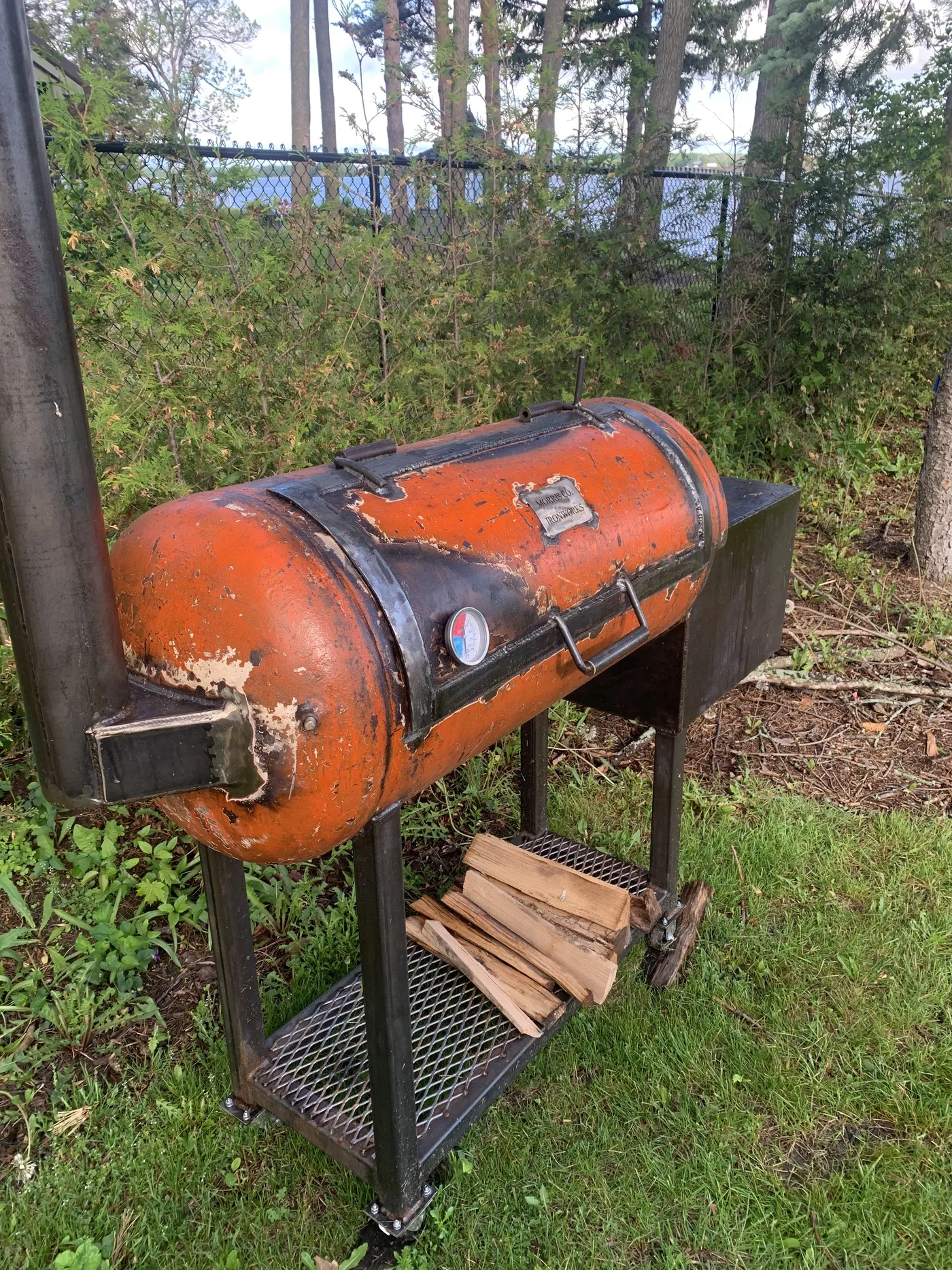
The smoker: a refurbished oil drum from Morris Co. Ironworks, with the oak stacked underneath.
Burned a bunch of oak at the beginning to get some coals going. The target was about 300°F (150°C); I ran slightly under.
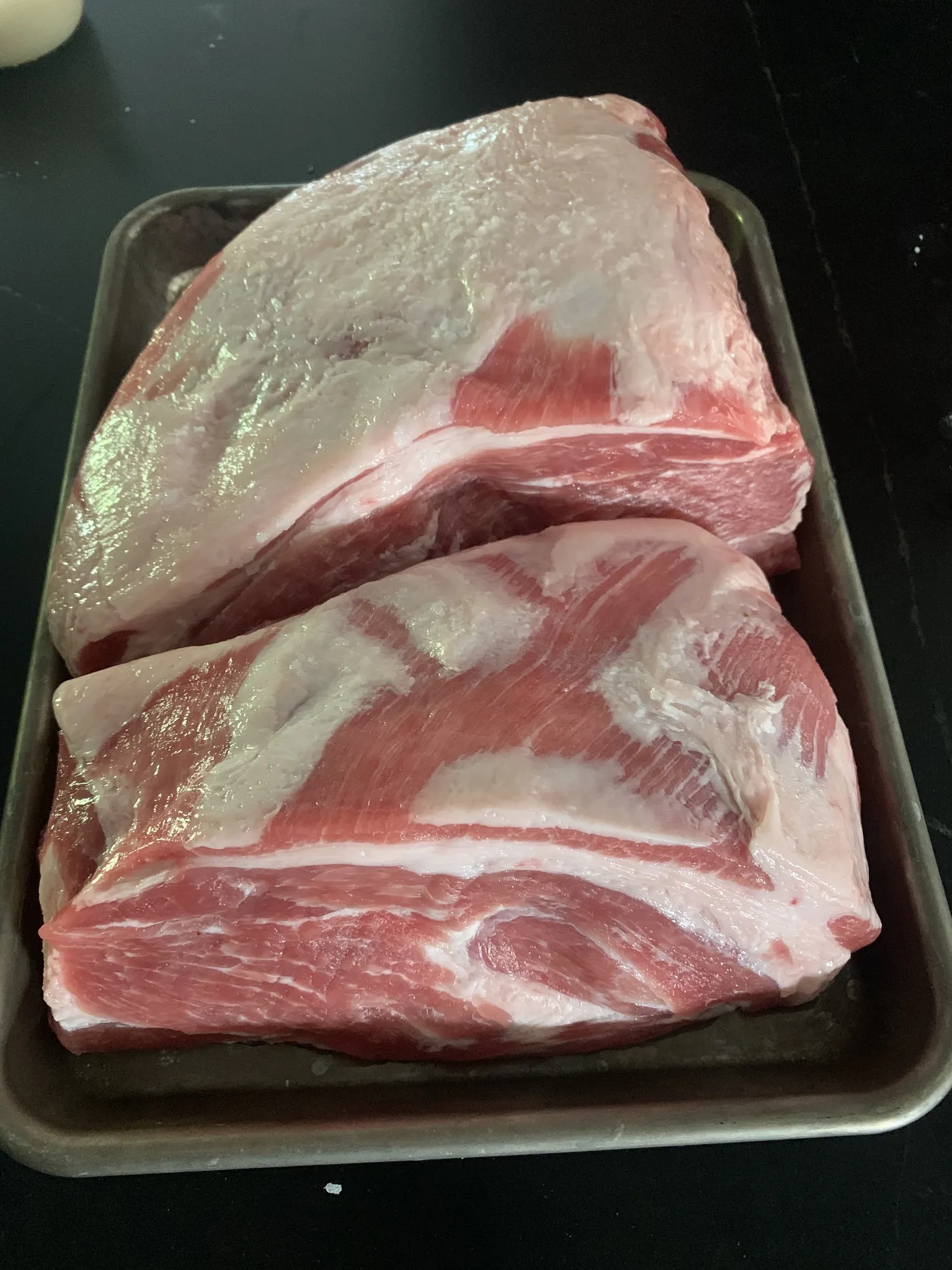
The 12 lb (5.4 kg) butt, cut into two. More surface area means more smoke, more seasoning and more bark.
Bone in or out, your call. The bone doesn’t actually add any flavour (Meathead covers that myth here), but it can work as a heat sink in some instances.
Memphis Dust doesn’t have any salt in it, so dry brine the meat first with kosher salt. The best resource I have seen on dry brining is Meathead’s guide.
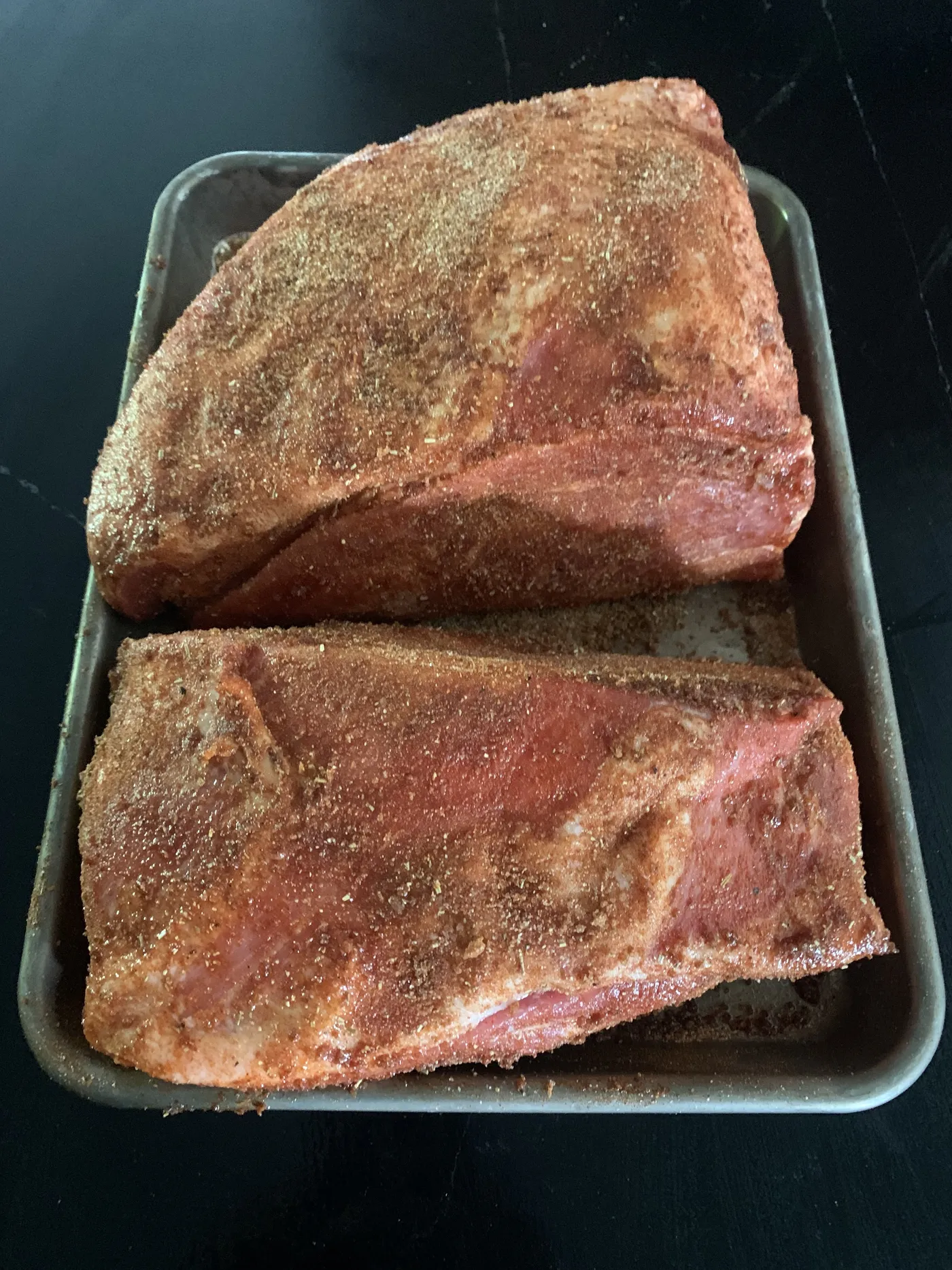
Memphis Dust on every side that morning. It works well on pork; there’s some sweetness to it along with the herbs.
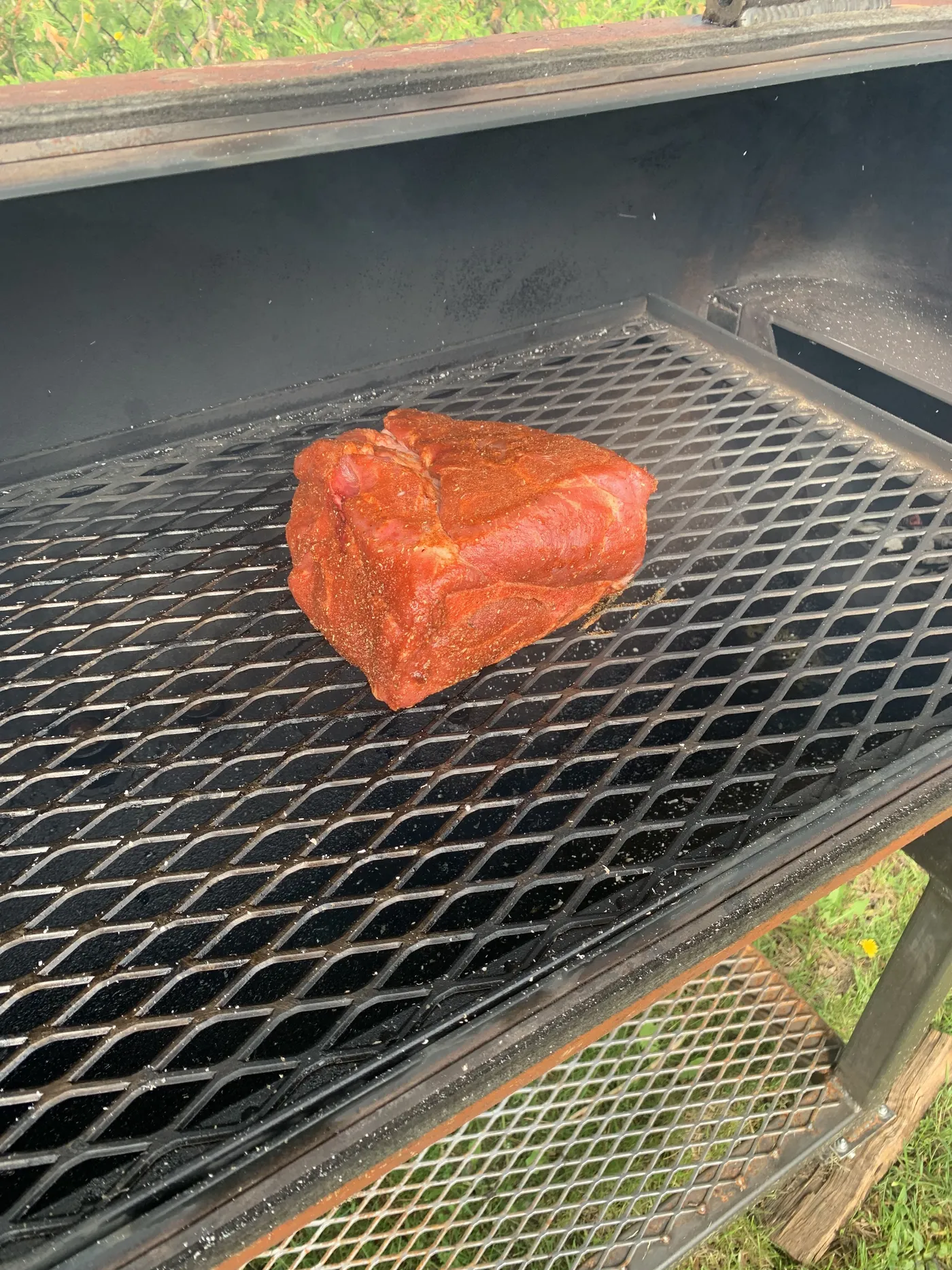
Both pieces went on at 9 a.m.
Lid down.
After that, a split about every 45 minutes to hold the temperature.
On an offset the wood is the fuel. You burn a bunch of splits at the start to build a bed of coals, then keep feeding it. The Big Green Egg runs on charcoal with very little airflow, so one small chunk of wood is all you need for smoke. The offset moves a lot of air. So even though it burns nothing but wood, there’s not as much smoke taste as you would think.
I haven’t cooked on a pellet smoker, but they work differently again: an auger feeds wood pellets from a hopper into a small fire pot, and a fan and controller hold whatever temperature you set. That’s about as set and forget as smoking gets.
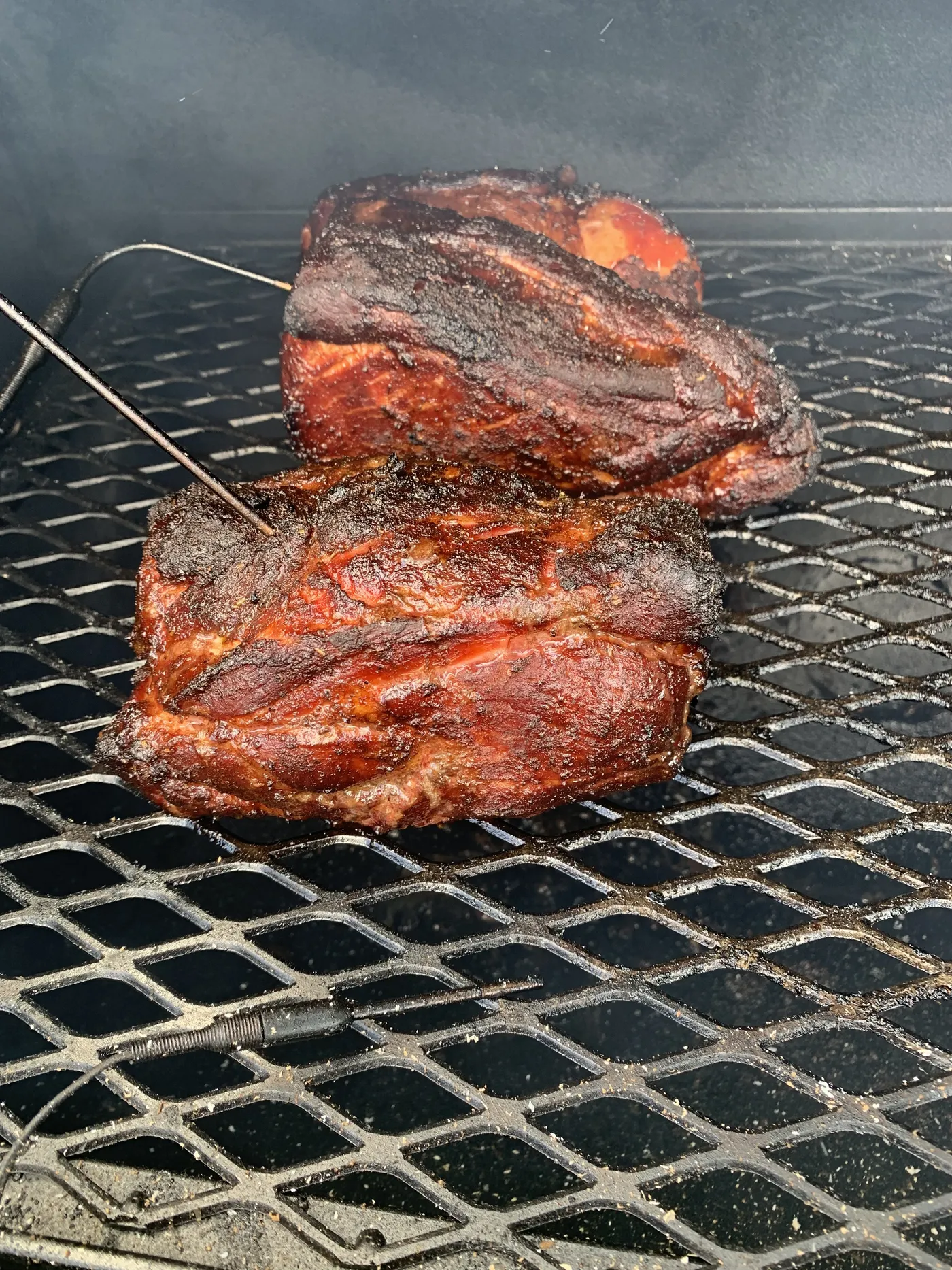
Four and a half hours in. The meat was probably around 150°F (65°C) and the smoker around 300°F (150°C).
Around here the temperature stops climbing, sometimes for hours. That’s the stall, and it’s evaporative cooling: the meat pushes moisture out to the surface, and as it evaporates it cools the meat, the same way sweat cools you. Don’t panic and don’t crank the fire. Meathead has a good article on the stall. Wrapping in foil blocks the evaporation and pushes through it.
I wrap once the meat stops rising, usually around 150°F (65°C); this time that was about four and a half hours in. Wrapping costs you some bark, and the bark is my favourite part, but it cooks a lot faster.
Probe wires down to the ThermoWorks, then the view I had all day. Not a bad place to tend a fire.
I run remote probes for the cooker and the meat so I don’t have to check as often. ThermoWorks is the best in the business.
I spritz with apple cider vinegar now and then. Not the most necessary step, but it keeps the outside moist. It depends on the humidity; it’s easier in Ontario than it was in Alberta.
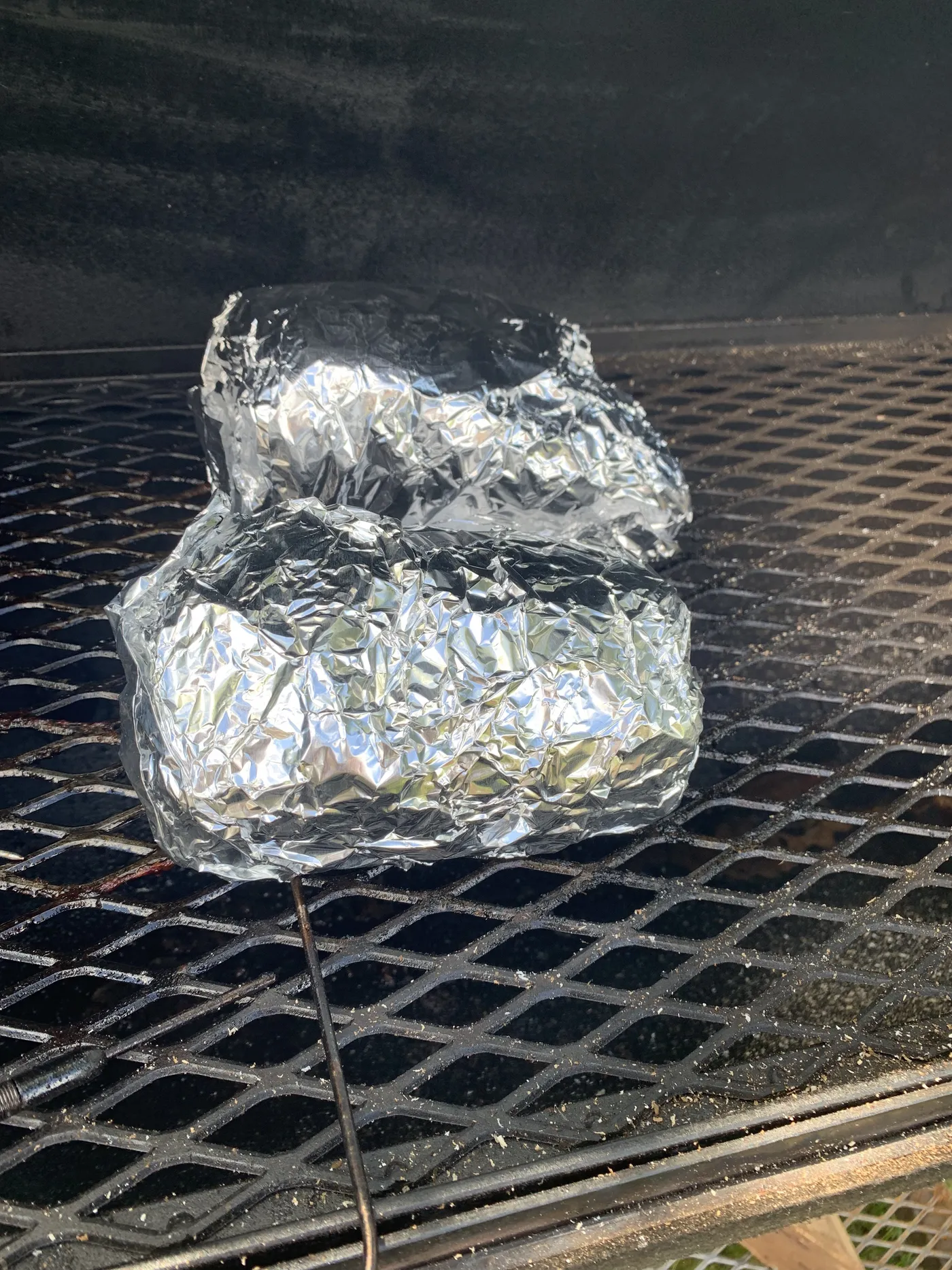
So into foil they went.
Seven hours in and back out of the foil to firm the bark back up. That’s the bark.
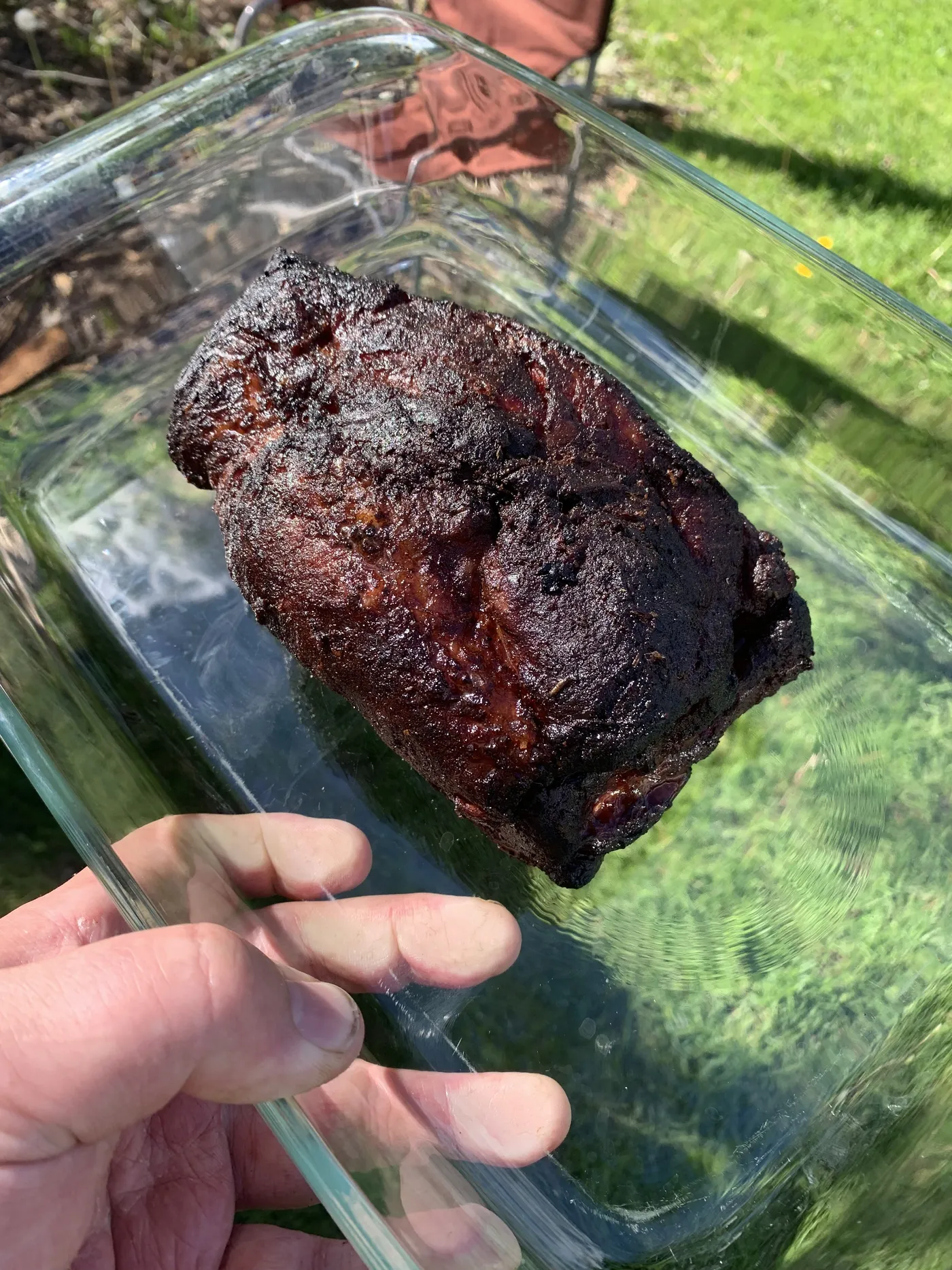
Seven and a half hours in. I start probing around 200°F (93°C) and wait until the probe slides in like butter. Don’t only go by temperature; the collagen needs time to melt. The two pieces finished at different times, which is why you probe each one. The meat is done when it’s done, not when the clock says so.
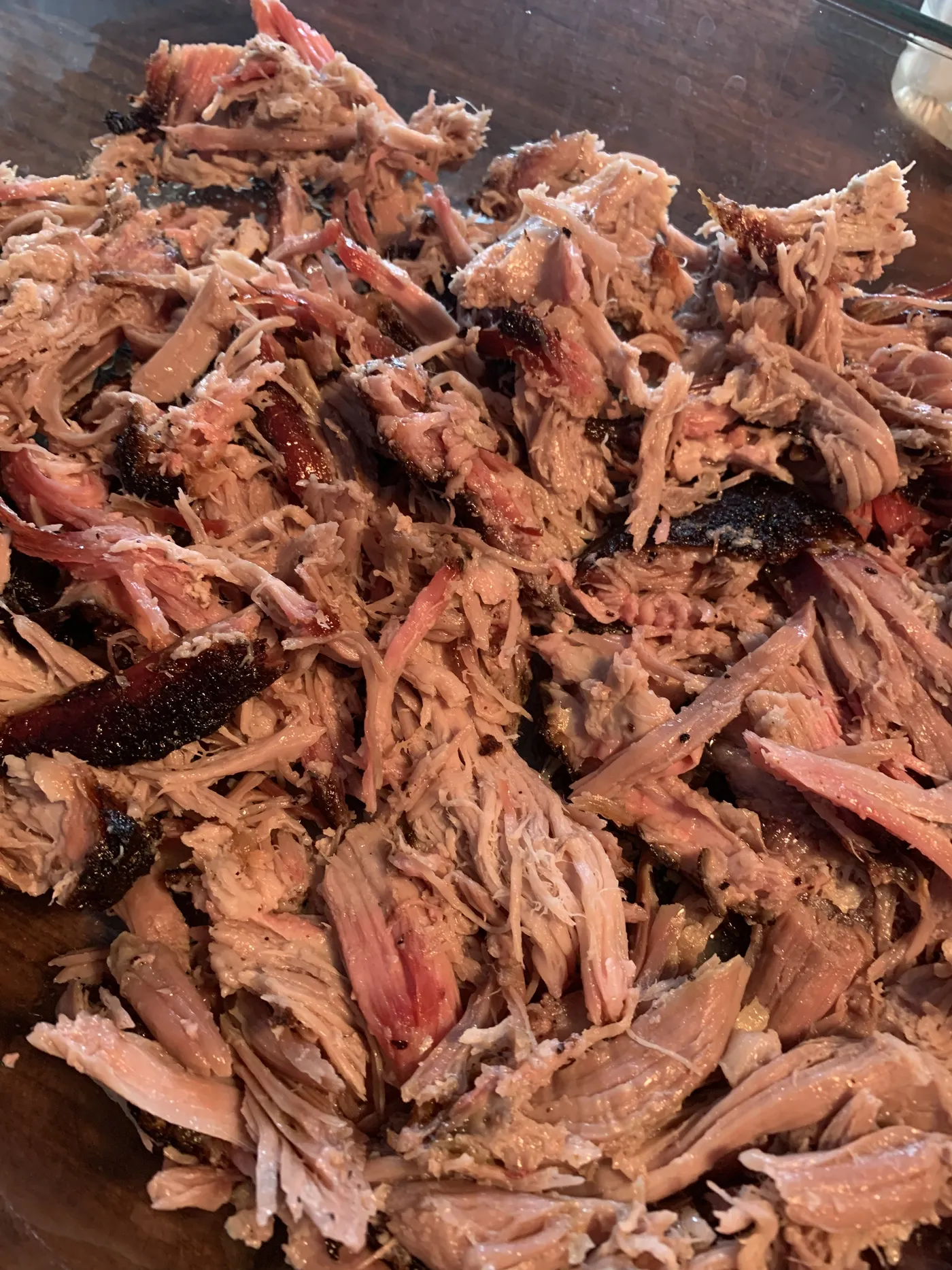
The first one only rested for about 45 minutes; we were hungry. If you need to hold it, wrap it and put it in a cooler and it will stay hot for hours. I have done that before, just not this time. I pull with forks, and the bone always comes out clean.
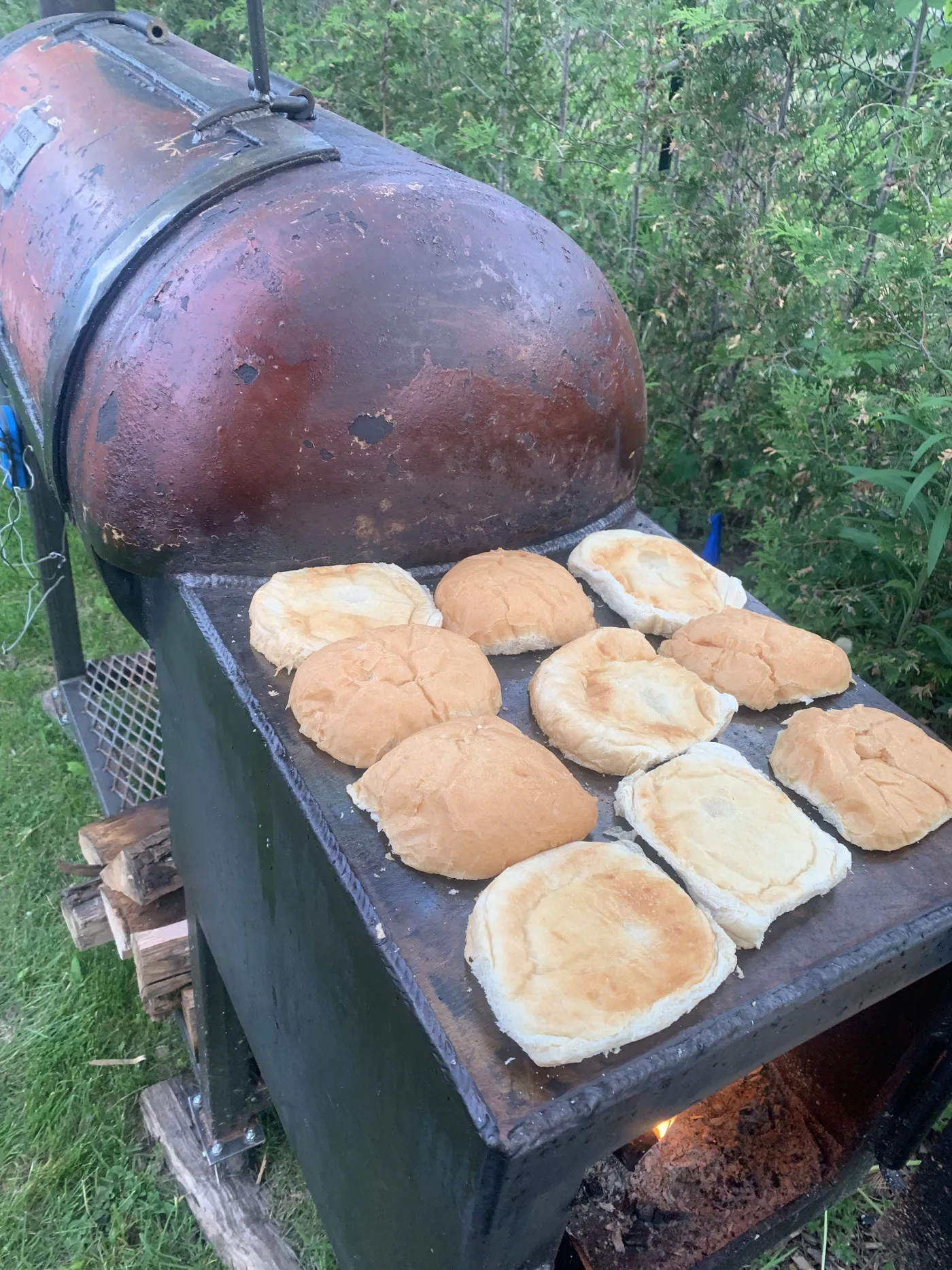
Buns on the firebox to toast.
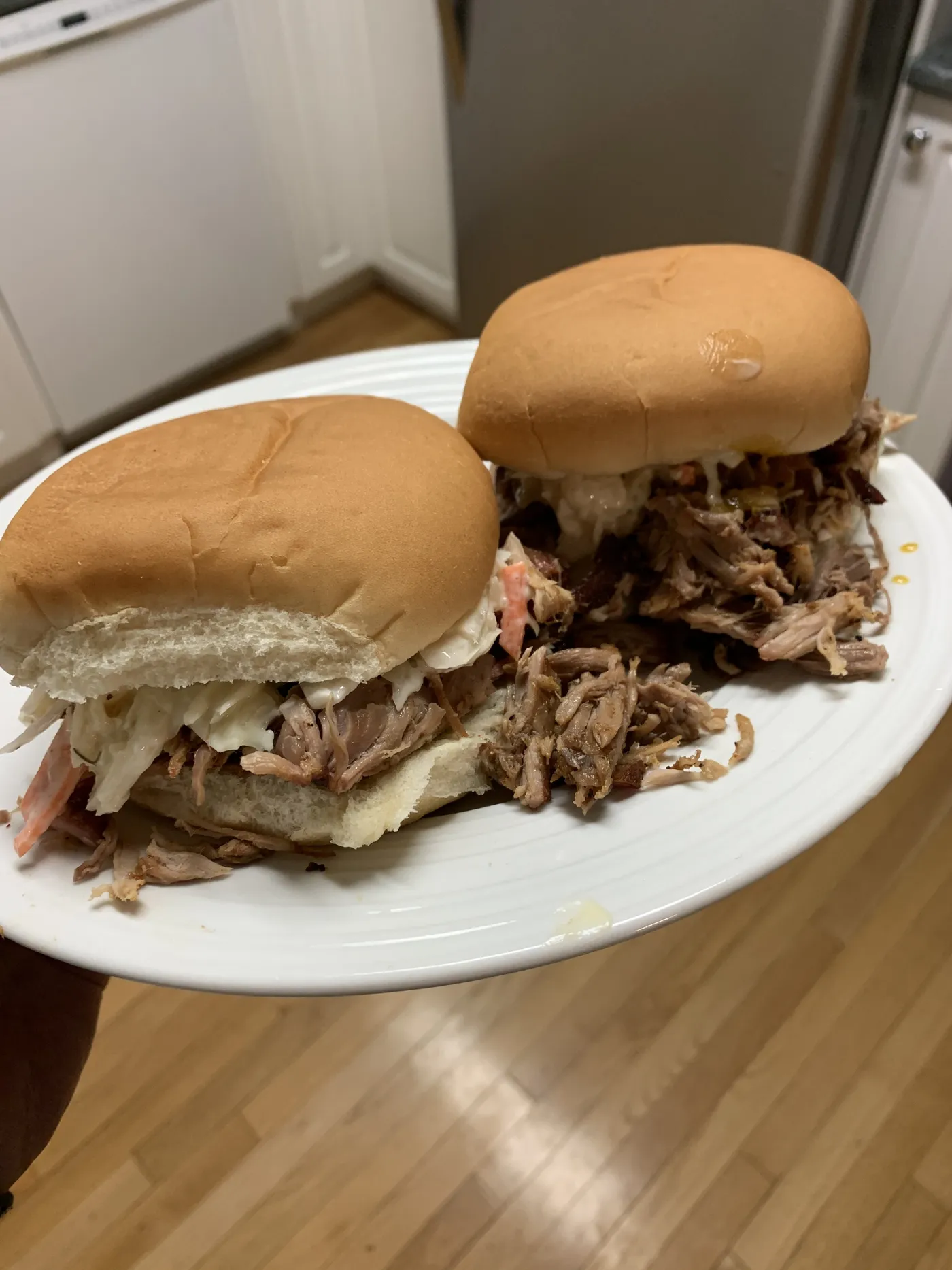
This sandwich is from an earlier batch of the same recipe. On it: Meathead’s Best Darn Mustard BBQ Sauce, slaw and pickles, or whatever you like. I love pickles; Nicole does not, so do as you would like.
There were three of us and it could have fed 10. Lots of leftovers, and pulled pork freezes amazingly, so that’s no hardship.
For results, the offset is the best of the bunch. It’s also a lot more work; you are tending a fire all day. These days I do pork butt on the Egg because it’s more set and forget.
I have done this recipe a number of times and it always turns out; I wouldn’t change anything. Except maybe start earlier in the day so dinner is on time.
If you just bought an offset, make this your first cook. It’s forgiving, it teaches you the fire, and it feeds a crowd.