Cole’s version
Cole's Pork Belly Burnt Ends
Inspired by / original recipe: https://www.thermoworks.com/blogs/thermoblog/smoked-pork-belly-burnt-ends-recipe-2
Recipe and cooking notes: https://cookingcarguy.com/test-drive-pork-belly-burnt-ends/#recipe
ThermoWorks' smoked pork belly burnt ends with my changes: a dry brine, Meathead's Memphis Dust, a 120–150°C (250–300°F) smoker, my own sauce and a finish on the stove. I make half of ThermoWorks' 3.6 kg (8 lb) batch, so the butter, brown sugar and honey are halved too.
Ingredients
- About 1.8 kg (4 lb) pork belly, skin off (a third of a full slab)
- Kosher salt, for dry brining
- Meathead's Memphis Dust, enough to coat every side liberally
- 85 g (6 tbsp) butter, sliced
- 60 mL (1/4 cup) brown sugar
- 30 mL (2 tbsp) honey
- Barbecue sauce to coat: Blues Hog Tennessee Red, or a store-bought sauce warmed with some vinegar and red chili flakes
- Sriracha or Louisiana-style barbecue sauce, for the store-bought version (optional)
- Steamed rice and sliced green onion, to serve (optional)
Directions
- Cut the belly into 2.5–4 cm (1–1 1/2 in) cubes and salt them for a dry brine. Memphis Dust has no salt in it; Meathead's dry brining guide covers how much.
- Coat the cubes liberally with Memphis Dust right away. No binder needed; the dry brine keeps working with the rub on.
- Set up the smoker for 120–150°C (250–300°F); I burn oak and applewood. Spread the cubes on the grate and smoke for about 2 hours, until they have good colour and bark.
- Put the cubes in a disposable aluminum pan with the butter, brown sugar and honey. Cover tightly with foil and put it back on the smoker for about an hour, until a large piece reads 95°C (203°F).
- Meanwhile, get the sauce ready: Blues Hog Tennessee Red as is, or a store-bought sauce warmed up with some vinegar and red chili flakes, plus sriracha or my Louisiana-style barbecue sauce if you like.
- Move the cubes to a clean pot, pour over the sauce and toss to coat.
- Finish them uncovered on the stove for about 15 minutes, until the sauce turns sticky.
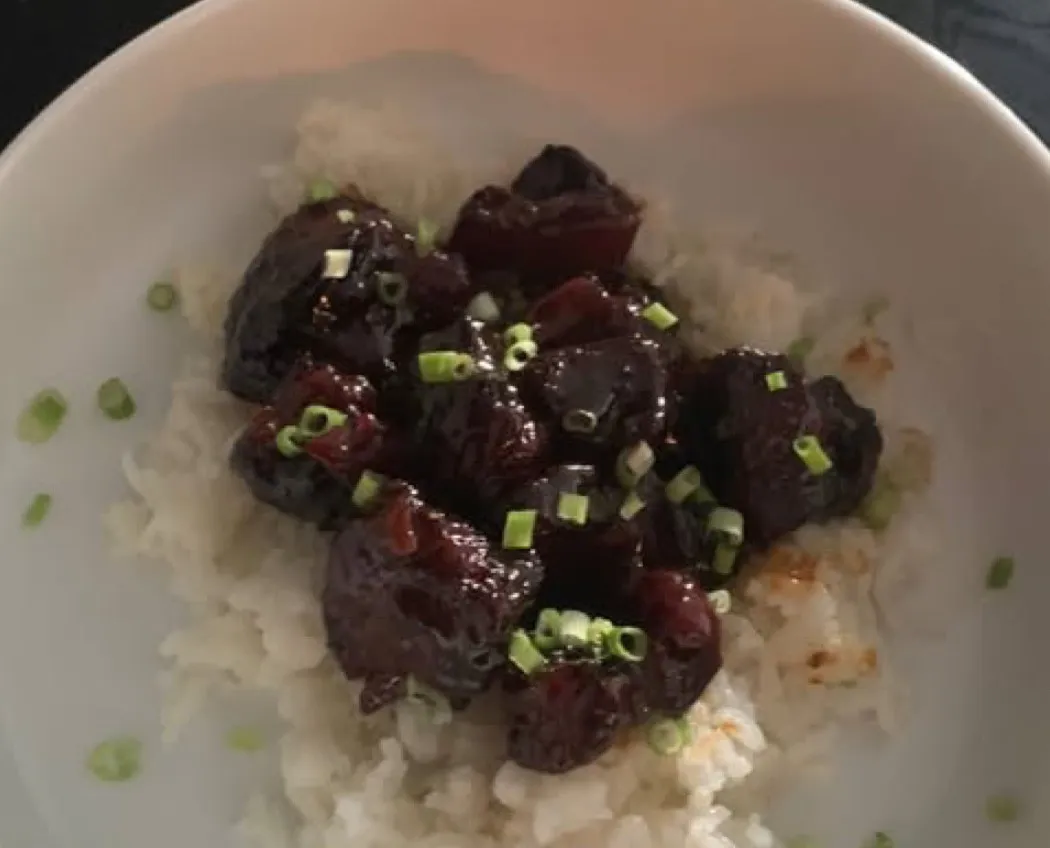
- Serve on rice with green onion, with toothpicks as an appetizer, or in a taco or a Vietnamese-style sandwich.
I had a full slab of pork belly, made bacon out of two thirds of it (a recipe for another time) and turned the last third, about 4 lb, into these. The method is ThermoWorks’ smoked pork belly burnt ends, and the rub is Meathead’s Memphis Dust from AmazingRibs. I’ve done them on the Egg and on the offset. They were perfect the first time, and I haven’t changed anything since.
What I changed and why
- Memphis Dust for the rub. ThermoWorks says to use your favourite barbecue rub. For pork, mine is Memphis Dust: sweetness, some spice and herbs. I make a big jar of it and it lasts quite a few cooks.
- A dry brine first, no binder. I cut the belly into squares, dry brine it, then spread the Memphis Dust on liberally. The meat is still moist from the brine, so nothing else is needed to hold the rub, and the dry brine still works with the dust on it.
- 120 to 150°C (250 to 300°F). ThermoWorks holds the smoker at 121°C (250°F). Anywhere in that range works.
- My own sauce. ThermoWorks mixes barbecue sauce with apple jelly, apple juice and Frank’s. I use Blues Hog Tennessee Red. If I don’t have it, I heat up a standard sauce and add some vinegar and red chili flakes, sometimes a little sriracha or my Louisiana-style barbecue sauce.
- Finished on the stove. ThermoWorks puts the sauced burnt ends back on the smoker for about 10 minutes. Mine go into a pot on the stove, uncovered, for about 15.
- Half the batch. ThermoWorks does 3.6 kg (8 lb). Mine was about 1.8 kg (4 lb), a third of a slab, skin off, with half the butter, brown sugar and honey, and it fed 4.
The walkthrough
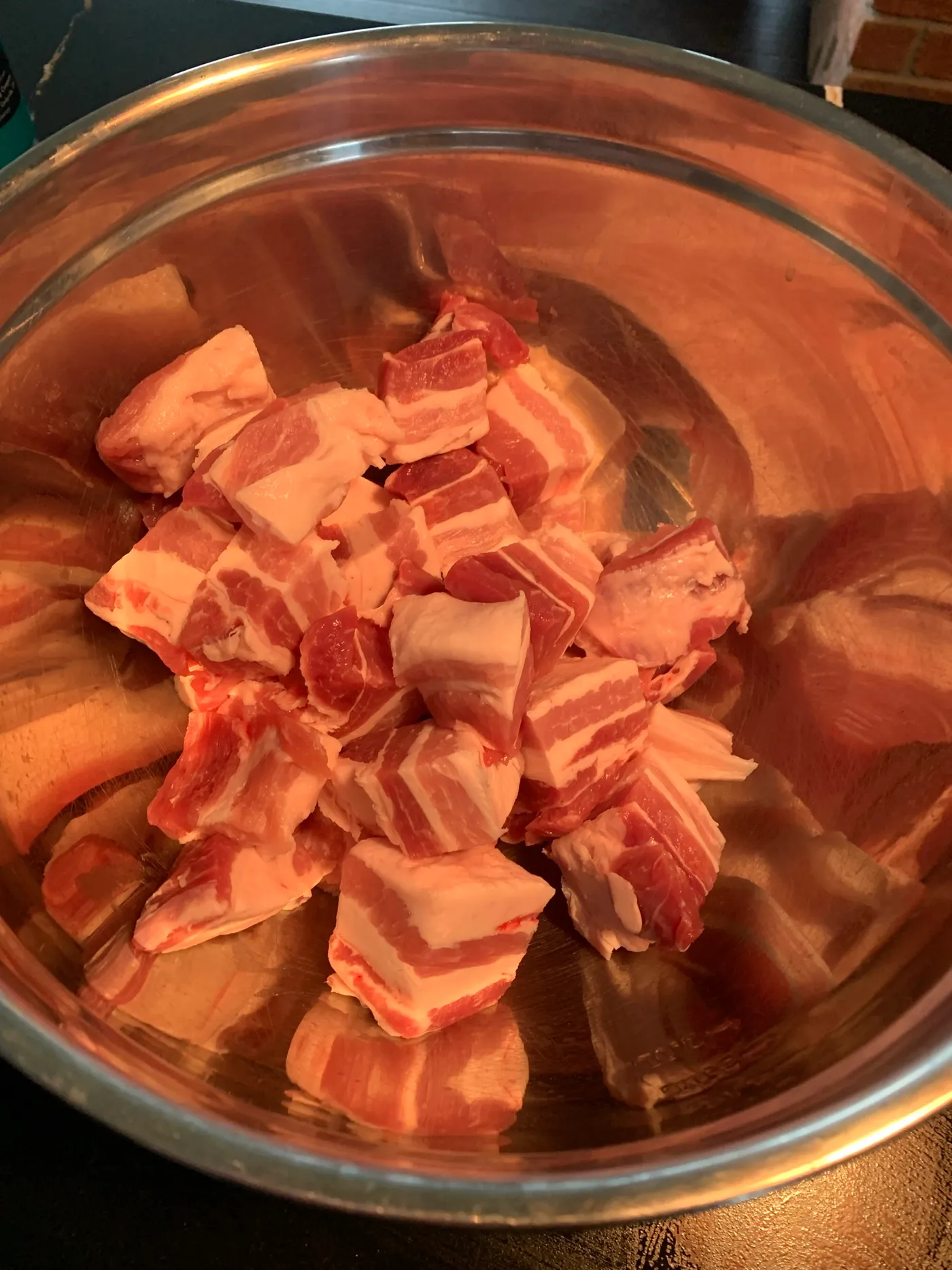
Cut the belly into 2.5 to 4 cm (1 to 1 1/2 inch) squares, then dry brine. Memphis Dust doesn’t have any salt in it, so the salt has to come from somewhere, and the best resource I have seen on dry brining is Meathead’s guide.
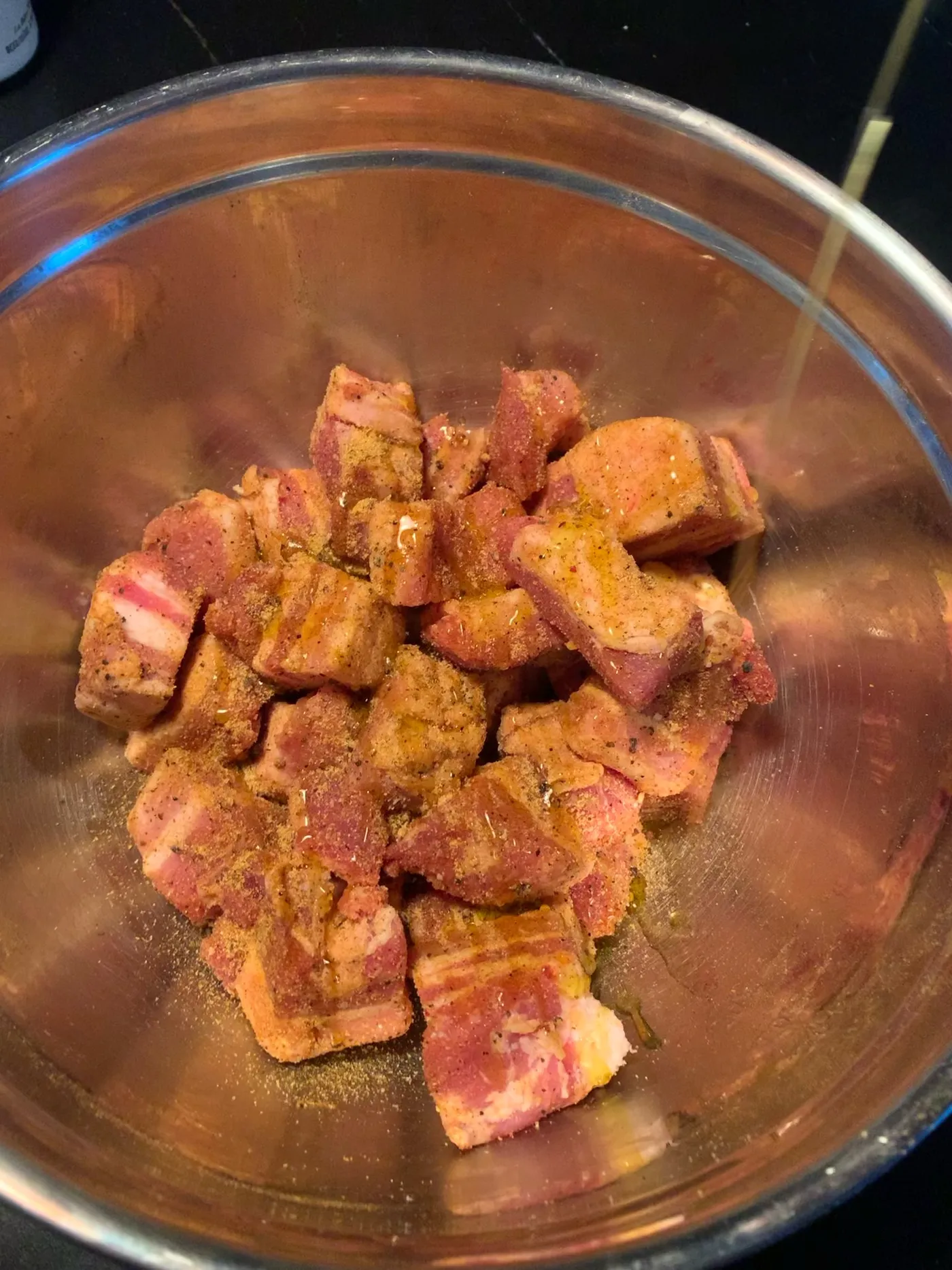
Then the Memphis Dust, liberally. No mustard or oil to make it stick; the meat is still moist from the dry brine.
On the smoker at 120 to 150°C (250 to 300°F), burning oak and applewood.
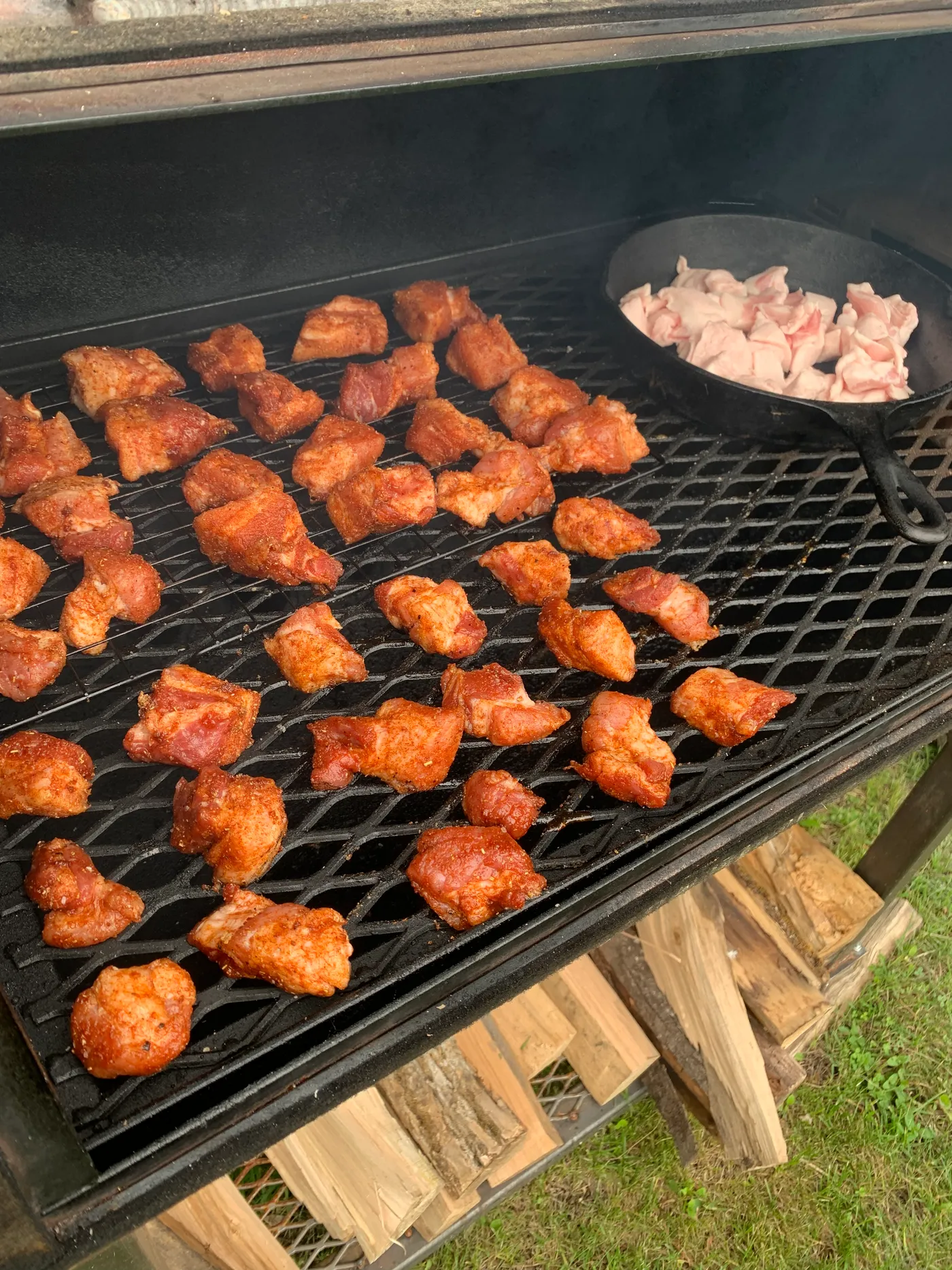
The pan in the back is rendering extra pork fat. You can cook potatoes or whatever you want in it.
About two hours on the smoker and they have colour and bark, ready for the pan.
Into a foil pan with butter, brown sugar and honey, covered tight, and back on for about an hour until a big piece reads 95°C (203°F). Pork belly is mostly fat and collagen, and it needs low and slow to render the fat and turn the collagen into gelatin. The covered pan turns it into a braise: liquid moves heat into the meat a lot faster than smoky air does, so the collagen breaks down faster. ThermoWorks explains it well in the recipe.
After the hour they come out glossy and tender. Into a clean pot, sauce on, toss, and 15 minutes uncovered on the stove until the sauce turns sticky.
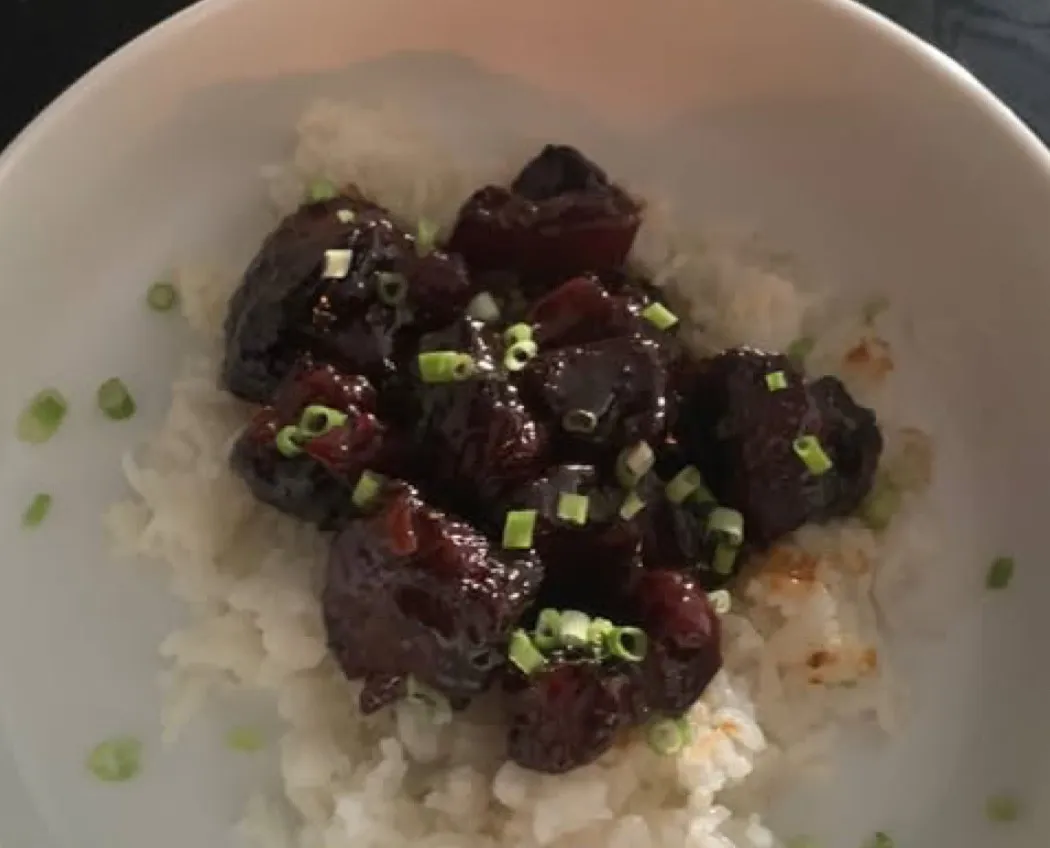
Don’t need to serve them on rice, but we like the Asian flair; some soy sauce and chili oil pair great. They’re very rich, so they also work as an appetizer with toothpicks for a couple of bites each, in a taco, or in a Vietnamese-style sandwich.
Verdict
Easy, forgiving and very delicious. The Egg and the offset both work, and other smokers will too. If you’re new to smoking at low temperatures, this is a good one to start with.